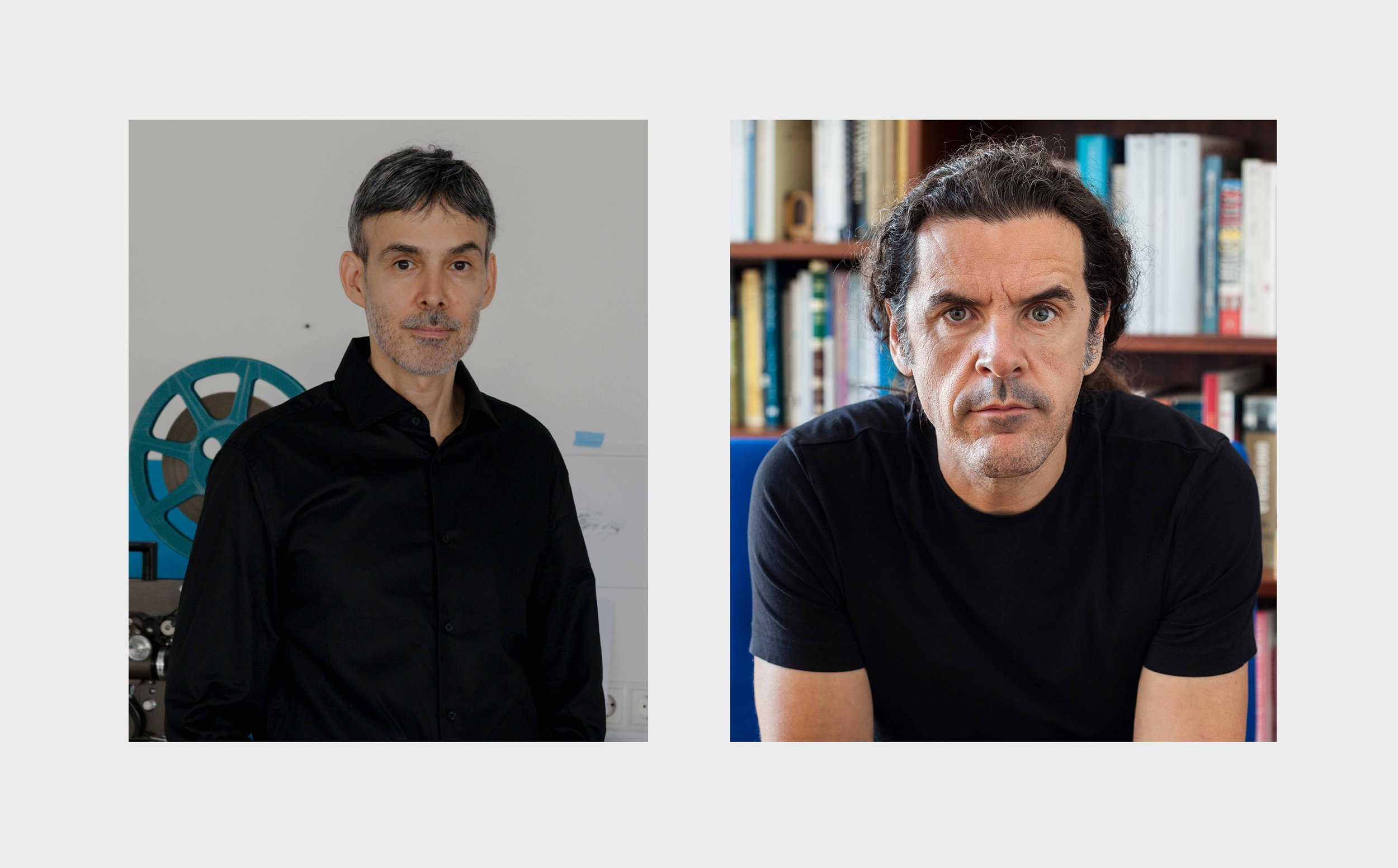
The Unpredictable in Art and Science
A public talk with Andrés Ramírez Gaviria and Vitor Cardoso
Phileas, Opernring 17, 1010 Vienna
1 December, 6.30pm
Artist Andrés Ramírez Gaviria and physicist Vitor Cardoso from the Center of Gravity at the Niels Bohr Institute, discuss our enduring attempt to understand, measure, and make sense of the world — and the limits of what we can know. The conversation explores how different ways of producing, interpreting, and communicating knowledge shape our understanding of reality.
The discussion will be held in English.
-
Andrés Ramírez Gaviria is an artist born in Bogotá, Colombia, who has been based in Vienna for over two decades. His work explores the intersections of science, technology, language, and history. Grounded in long-term research, his conceptual practice examines how systems of knowledge are constructed, transmitted, and interpreted. Drawing on diverse methodologies and historical references, he creates work that invites alternative modes of perception and thought.
Gaviria’s work has been exhibited at Kunsthaus Graz; BA CA Kunstforum Vienna; Lentos Museum Linz; Kunsthaus Dresden; GAMeC in Bergamo; La Casa Encendida in Madrid; and the Museum of Modern Art and the Museo de Arte del Banco de la República in Bogotá, as well as at the Sonambiente and Transmediale festivals in Berlin and the Caribbean Biennial in Santo Domingo, among others.
He is the recipient of the transmediale.06 Award and the Cisneros Fontanals Art Foundation Emerging Artist Award. In 2014, Gaviria co-founded Sigmund, and in 2017 Anna, two non-profit exhibition spaces in Vienna, together with Norbert Pfaffenbichler. He is also co-editor with Yuki Higashino of the annual publication Agency. -
Vitor Cardoso is a Bohr Professor and Director of the Center of Gravity at the Niels Bohr Institute, and an IST Distinguished Professor at Instituto Superior Técnico. He pioneered black hole spectroscopy, and constraints on particle physics from supermassive black holes. He is co-author of the books The Birth of an Idea, The eclipse of time and Superradiance and of over 300 scientific papers. His research was recognized by the European Research Council, with three prestigious ERC Grants. He is a member of the Royal Danish Academy of Sciences and of the Lisbon Academy of Sciences, and the 2023 ULisboa Award, the highest honour conferred by the University of Lisbon, for his “extraordinary contributions to theoretical physics and for scientific progress on a global scale.” He was awarded the Ordem de Sant’Iago da Espada presidential title, for scientific achievements.